As the US moves away from the post Cold War order, Argentina breaks free from 95 years of failed protectionist policies
By Agustin Almada, Economist at Argentine Taxpayers Association
Deal Announcement and US geopolitical shift towards Central and South America
Last November 13th 2025 the White House released a JOINT STATEMENT ON FRAMEWORK FOR A UNITED STATES-ARGENTINA AGREEMENT ON RECIPROCAL TRADE AND INVESTMENT.
The same day the US Government announced 3 more deals with Western Hemisphere trading partners: Ecuador, El Salvador and Guatemala.
Thus, the US – Argentina deal is part of a greater rearrangement of hemispheric trade, investment flows and supply chains. By which the United States is seeking to reassert its position as regional hegemon. A placement that has been compromised over the last decades by hostile state and non-state actors.
- China consolidating as the biggest trading and investment partner for most countries in South America.
- Russia and Iran, also extending their influence and posing a national security threat to the US and US aligned countries; for instance providing drone and missile technology to Venezuela and Bolivia, or orchestrating riots that shook all of South America, and forced political change in countries like Argentina, Chile and Colombia.
- Drug cartels, gaining unprecedented control over large swathes of territory in numerous countries, such as Colombia, Ecuador, Brazil and Mexico.
US Military build up in the Caribbean amidst Operation Southern Spear
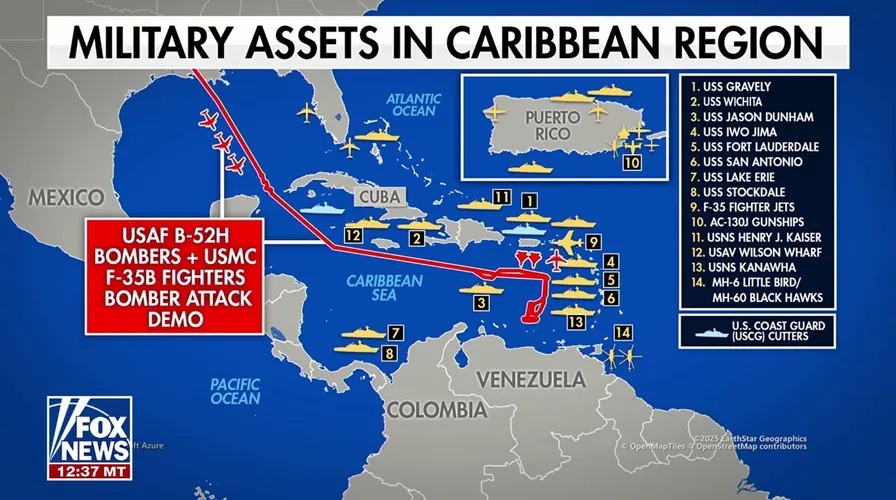
US moving naval assets into the Caribbean as Maduro showdown escalates. Fox News.
From Globalization to Geopolitics
When asked about the agreement, President Javier Milei put it bluntly: “The world has changed. We have gone from globalization to geopolitics».
According to Milei, USA has redefined its geopolitics. Before, he argued, US policy was lenient towards hostile governments, trying to appease and seduce them, while allies in the region were given nothing, because they were already allies. This entailed perverse incentives, by which antagonistic actors were only interested in doubling down populist and anti-American policies, because they had all the benefits and no costs.
Milei stated that, now, Trump and his cabinet have understood that it didn’t work. Incentives ought to be aligned. Benefits to friends, while unfriendly actors are to be dealt with strength.
The world has changed. We have gone from globalization to geopolitics.
(Javier Milei, President of Argentina)
Javier Milei on US geopolitical strategy shift under Donald Trump
US Treasury financial support to Argentina
Therefore, especially for Argentina, the deal cannot be contemplated in isolation.
Javier Milei inherited an almost unsurmountable macroeconomic and financial situation; that comprised a quasi hyperinflation and a fiscal mess, together with an imminent banking crisis and a sovereign debt default.
Milei was very successful stabilizing the fiscal and monetary fronts, but needed financial support to avert a new sovereign debt default, of which Argentina has had 3 so far in the 21st century.
The US Treasury has provided that support to Argentina through 2025, via:
- USD 20 billion IMF Extended Fund Facility.
- USD 20 billion currency swap line between Argentina’s Central Bank and the US Treasury, mirroring a similar credit line from the People’s Bank of China.
- US Treasury direct intervention in Argentina’s local currency market, right before mid term elections.
- US Treasury lobbying Wall Street investment banks to provide a potential REPO line to Argentina.
If we would only take into account the text of the agreement, Argentina concedes far more than the US. But considering the greater picture, it looks much more balanced.
Argentina is opening up to US trade and investment to put an end to its import substitution industrialization experiment
Argentina plans to use the agreement to break free from 95 years of failed protectionist policies, that have been in place since the global trade collapse of the 1930s.
Opening up trade with the US, in sectors up to now dominated by internal market oriented, import substitution industries, like:
- Motor vehicles
- Machinery
- IT hardware
- Pharmaceuticals
And facilitating US investment in critical minerals and other industries by aligning the intellectual property framework to international standards.
The new trade policy could lead to a relocation of labor and capital. Away from the Greater Buenos Aires rust belt, into Argentina’s vast interior.
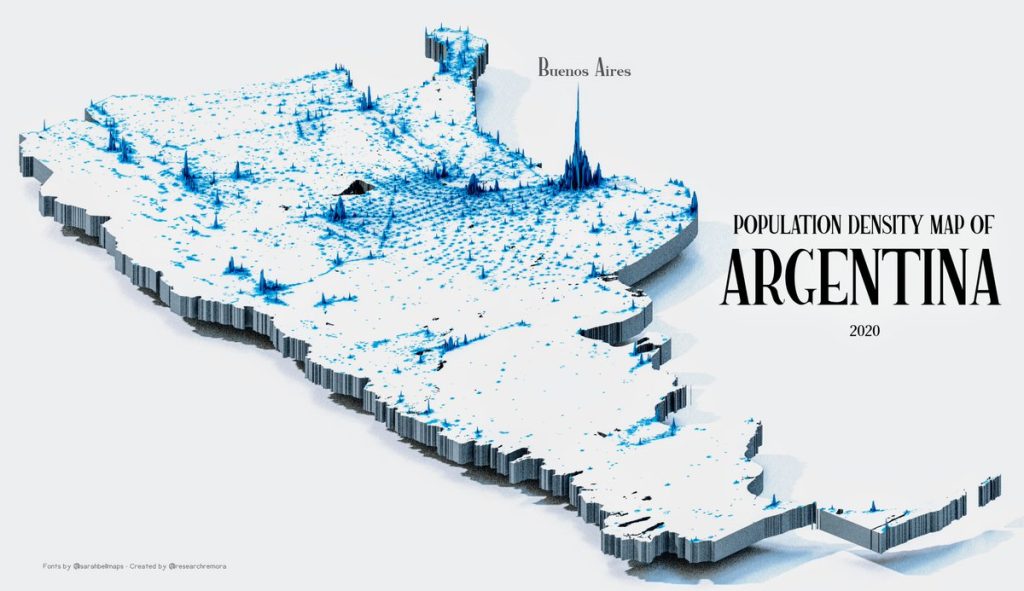
Population density map of Argentina by @researchremora
According to President Milei, the agreement will accelerate Argentina’s economic convergence. Increasing productivity, exports and wages; creating well paying jobs and propping up government revenue in the process.
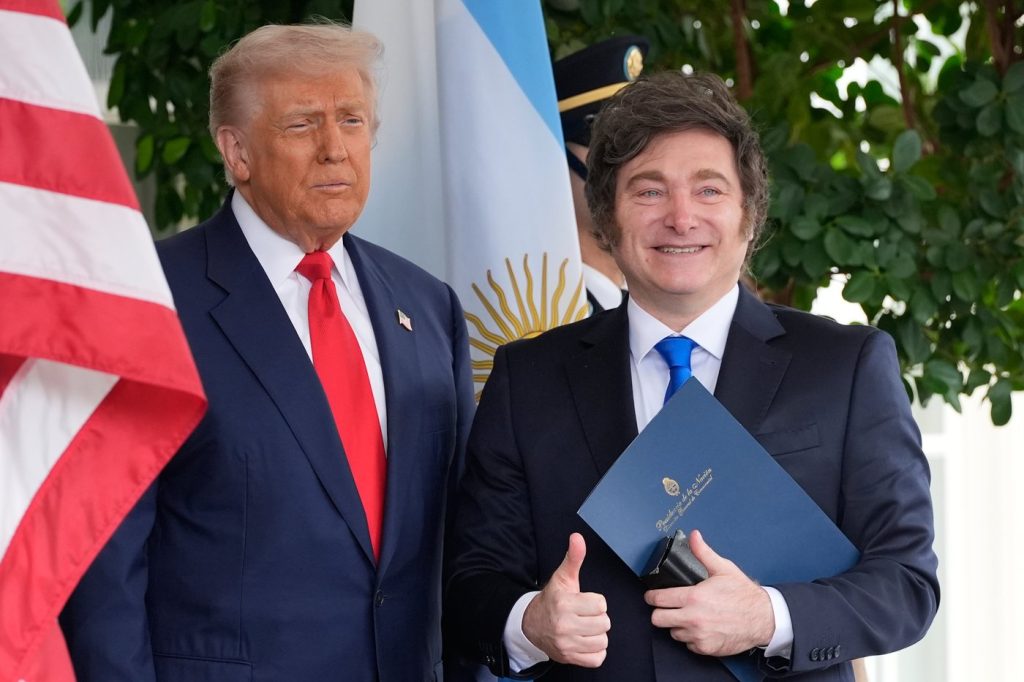
Donald Trump welcomes Javier Milei at the White House on October 14th 2025.
REUTERS/Kevin Lamarque.